" height="22.21672870003851px" id="z3WvM4hhx" transform="translate(0 7.783)" width="44.5160044463523px"/><path d="M 0 0 L 2.973 0 L 2.973 29.237 L 0 29.237 Z" fill="rgb(51, 51, 65)" height="29.23683002950565px" id="JHCCz3Moo" transform="translate(52.332 0)" width="2.9732091795568465px"/><path d="M 0 0 L 18.335 0 L 18.335 2.973 L 0 2.973 Z" fill="rgb(88, 93, 247)" height="2.9732091795568505px" id="TtL1Ujsfx" transform="translate(26.217 3.072)" width="18.334926489198978px"/><path d="M 0 1.817 C 0 0.813 0.813 0 1.817 0 C 2.82 0 3.634 0.813 3.634 1.817 C 3.634 2.82 2.82 3.634 1.817 3.634 C 0.813 3.634 0 2.82 0 1.817 Z" fill="rgb(88, 93, 247)" height="3.633967846768943px" id="E_sZ1ZJZP" transform="translate(57.862 26.217)" width="3.6339678467688827px"/></g></svg>)
6 Leading Multi-Location Inventory Management Software in Fashion
Nūl, Nextail, Toolio, RELEX, Increff, and Centric Software are top 6 leading multi location inventory management software for different needs in fashion.

Nūl Content Team
An Experienced Research & Knowledge Team
The Nūl Content Team combines expertise in technology, fashion, and supply chain management to deliver clear, practical insights. Guided by Nūl’s mission to end overproduction, we create content that helps brands forecast demand more accurately, optimize inventory, and build sustainable operations. Every piece we publish is grounded in real-world experience, ensuring it’s both credible and actionable.

Table of contents
A flagship store sells out of a bestselling jacket in three days. Forty miles away, the same jacket sits untouched on another store's rack. Neither location can see what the other has, because the plan lives in a spreadsheet and the stock sits in a separate system.
Multi-location inventory management software fixes this by connecting every store, warehouse, and channel into one system, so teams can transfer, replenish, and plan around real stock.
This guide compares 7 platforms built for multi-location fashion retail, from AI-driven category management to store-level allocation and open-to-buy planning.
What Is Multi-Location Inventory Management Software?
Multi-location inventory management software is a system that tracks and syncs stock levels across every store, warehouse, and sales channel a business operates, from one connected platform.
Instead of each location keeping its own count in a spreadsheet or point-of-sale system, the software pulls stock data into a single source of truth. Teams can see what's in stock at any location in real time, transfer inventory between stores, and set replenishment rules by location instead of applying one rule company-wide.
6 Multi-Location Inventory Management Software: Reviews and Prices
Tool | Best For | Core Multi-Location Capability | Pricing |
Nūl | Multi-store replenishment and rebalancing with AI agents | Per-store replenishment + margin-scored store-to-store transfers | Demo-based, custom price |
Nextail | Automated store-level allocation and replenishment | Computer-vision first allocation + end-of-life store transfers | Custom quotes |
Toolio | Location-level allocation tied to one OTB plan | Store distribution and replenishment synced to company budget | Custom quotes |
RELEX Solutions | Large-scale multi-store replenishment and allocation | Automated in-season replenishment across the full supply chain | Custom quotes |
Increff | Stock recommendations and fulfillment by location | Channel/location-level forecasting paired with its own WMS/OMS | Custom quotes |
Centric Software | Allocation and rebalancing inside a PLM suite | AI in-season allocation, replenishment, and markdown rebalancing | Custom quotes |
Nūl
Nūl is an agentic inventory optimization platform built for fashion category management with 4 agents handling the core multi-location work:
Replenishment drafts purchase orders from live stock coverage.
Rebalance detects imbalances between stores and shows the gross margin each suggested transfer would recover.
Planning audits SKU performance against size curves by store tier.
Allocation places new inventory across channels before a unit ships.
For anyone who'd rather ask a question than dig through a dashboard, Nūl provides Zoey, an AI co-pilot to answer in plain language, pulling only from the brand's own data.
By using Nūl, the results reported for one Southeast Asian fashion brand: a $6.7M annualized gross margin uplift and a 20-point improvement in in-stock rate.
Price: Custom quote
Best for: fashion and apparel brands managing replenishment and rebalancing across stores with AI.
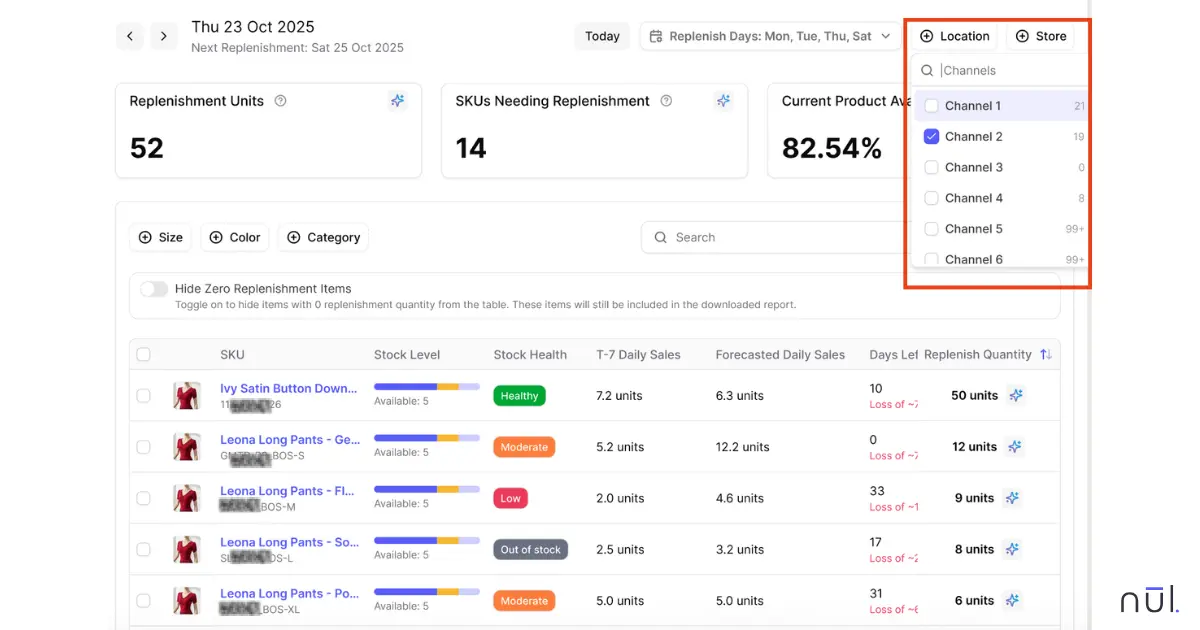
Nūl is an agentic inventory optimization platform built for fashion category management.
Nextail
Nextail's core job is deciding how much inventory each store gets and when. Its allocation and replenishment engine already accounts for fashion constraints like prepacks, visual merchandising rules, and store-level minimums and maximums. Thus, its recommendations don't need much manual correction before they reach a location.
2 main features are:
First Product Allocation uses computer vision to set smarter opening quantities store by store, suitable for a new style with no sales history yet.
Store Transfer rebalances stock between stores as a product nears the end of its life by moving inventory to where it will still sell instead of letting it sit.
Price: Custom quote
Best for: fashion retailers that want automated store-level allocation and replenishment.
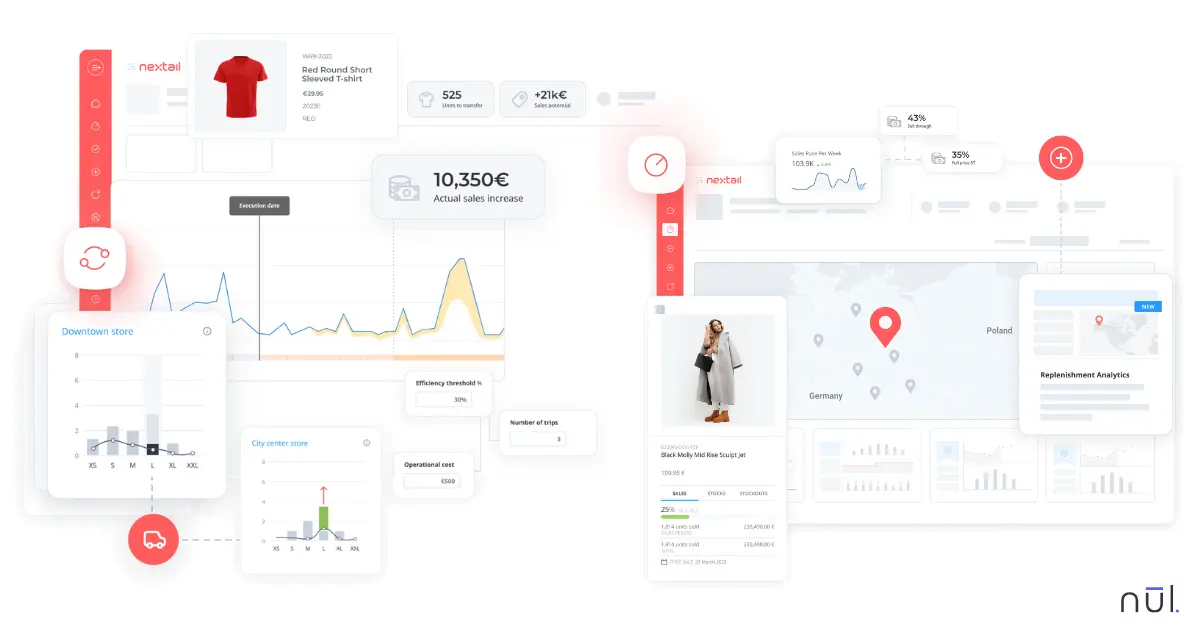
Nextail's core job is deciding how much inventory each store gets and when. (Source: Nextail)
Toolio
Toolio distributes and replenishes stock across stores automatically once a plan is approved. What sets it apart is that every one of those location-level decisions ties back to the same open-to-buy plan the finance team is using, so a store's replenishment order and the company's overall budget stay in sync instead of drifting apart.
Toolio uses tournament forecasting, which means testing several demand models per category or SKU and keeping whichever performs best. Then it feeds those location-level numbers, adjusting for stockouts, promotions, and anomalies along the way.
Besides, built-in AI agents of Toolio handle the cleanup work of fixing historical data and flagging errors before it reaches the allocation layer.
Price: Custom quote
Best for: fashion retailers that want location-level allocation and replenishment tied to one financial plan.
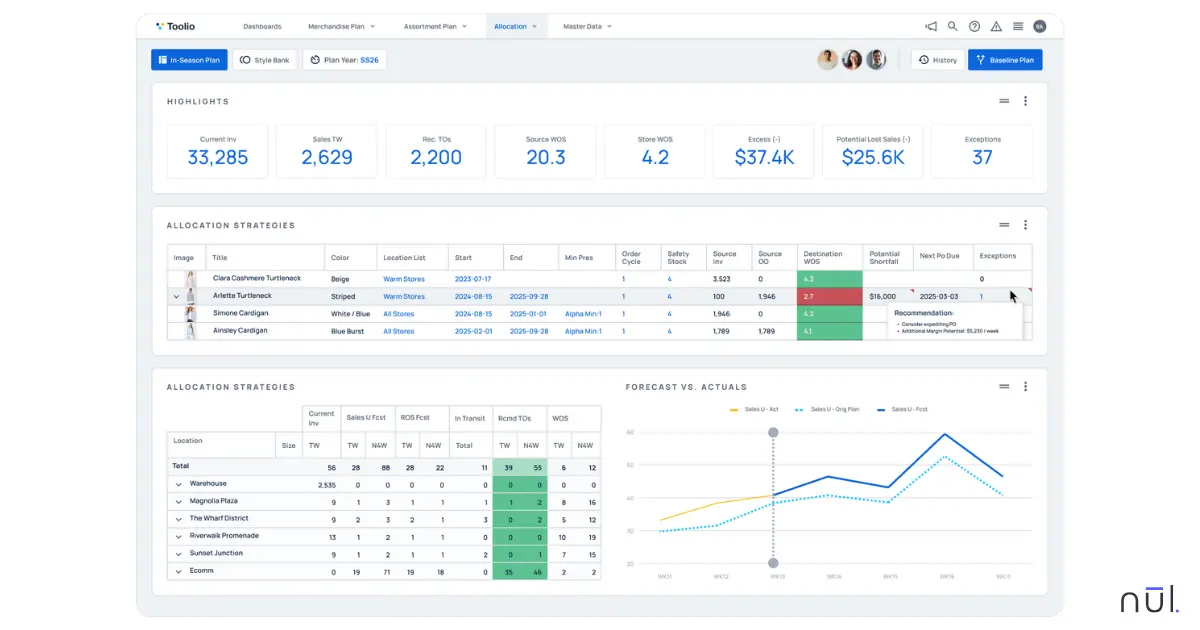
Toolio distributes and replenishes stock across stores automatically once a plan is approved. (Source: Toolio)
RELEX Solutions
RELEX automates in-season replenishment and allocation across every location it's connected to, so reorder and distribution decisions run without a planner working through each store by hand. Pre-season planning with pre-packs sets the starting distribution across stores before a season begins, and a dedicated MFP/OTB module keeps that plan tied to budget.
The trade-off for multi-location retailers: RELEX plans supply chains well beyond fashion retail, so setting it up to handle store-level allocation specifically tends to be a bigger project than the more focused tools on this list. Though, its cloud deployment is positioned to cost less upfront than older legacy suites.
Price: Custom quote
Best for: larger fashion, sportswear, and textile retailers that need forecasting, replenishment, and allocation across the full supply chain.
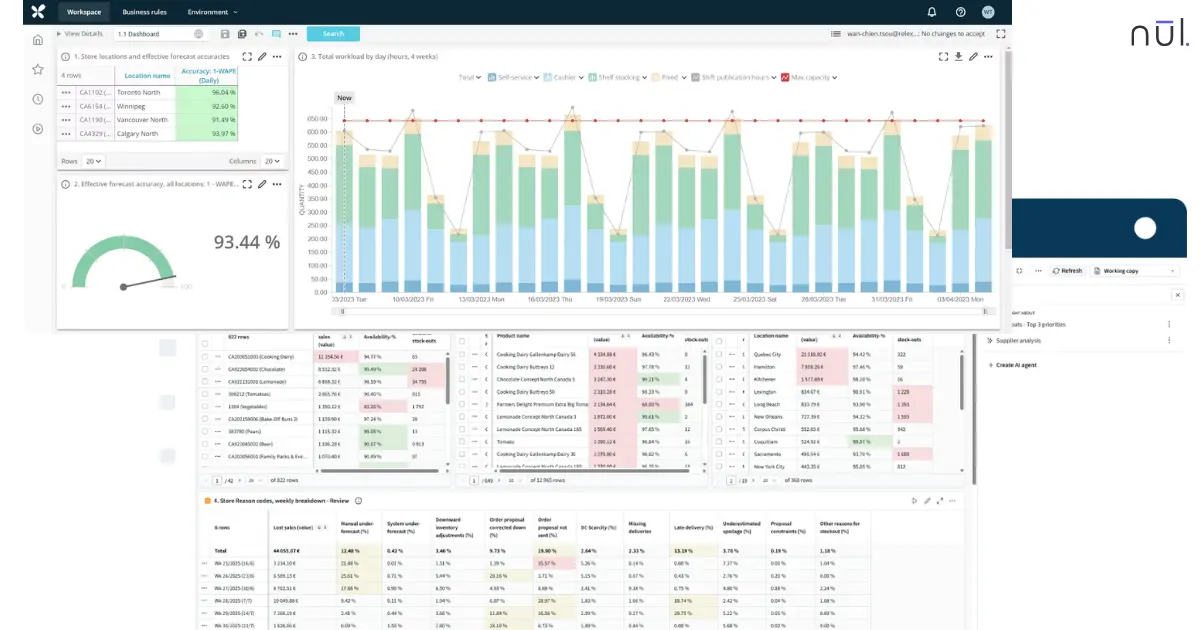
RELEX automates in-season replenishment and allocation across every location. (Source: RELEX)
Increff
Increff's multi-location work centers on demand forecasting and stock-level recommendations that run by channel and by location rather than as one aggregate number. As a result, a warehouse, a flagship store, and an online channel can each get a recommendation suited to how it actually sells. Markdown management applies those same location-level insights to pricing.
The core features of Increff are:
True Rate of Sale model adjusts demand signals for stockouts, broken size sets, and liquidation activity.
Store-StyleRank prioritizes which stores should receive each style based on expected sales potential.
Price: Custom quote
Best for: fashion and footwear retailers that want inventory optimization combined with warehouse and omnichannel fulfillment.
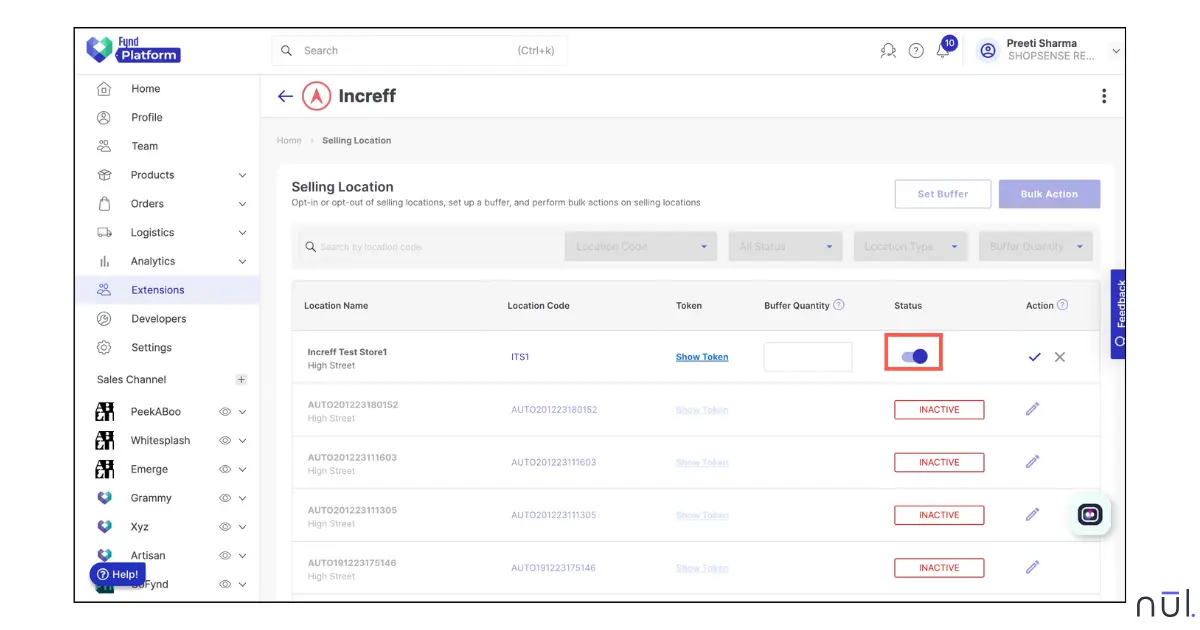
Increff's multi-location work centers on demand forecasting and stock-level recommendations. (Source: Increff)
Centric Software
Centric Software has a dedicated allocation and replenishment module to handle multi-location work directly, including:
AI-driven in-season recommendations decide how stock should move and replenish across stores,
A separate pricing and inventory module handles stock rebalancing and markdown timing once inventory is in place.
Both connect to Centric's broader merchandise planning, assortment planning, and demand planning modules, so a store's replenishment order reflects the same numbers used in company-wide planning.
Centric is best known for its product lifecycle management (PLM) suite, and its inventory tools are typically sold and evaluated as part of that larger platform rather than as a standalone purchase. You are worth confirming early if multi-location inventory is all a brand actually needs to avoid an overwhelming tool.
Price: Custom quote
Best for: fashion, sport, and luxury brands that need allocation, replenishment, and stock rebalancing across stores as part of a larger planning stack.
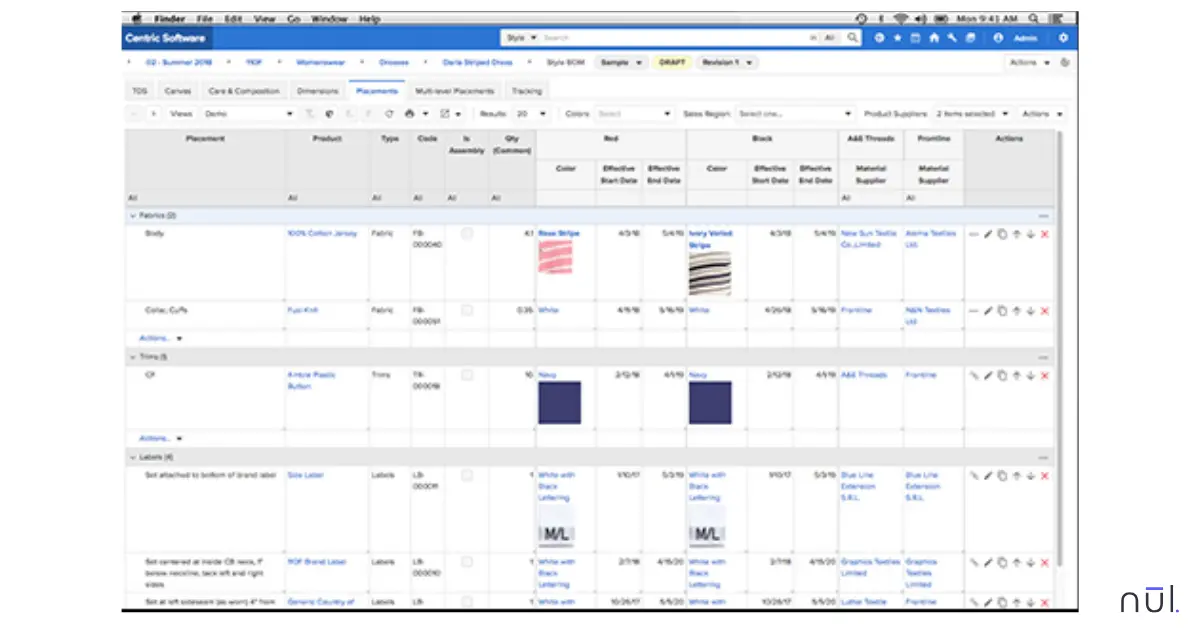
Centric Software has a dedicated allocation and replenishment module to handle multi-location work. (Source: Centric Software)
Conclusion
Multi-location inventory problems rarely come from one missing feature. They come from stock decisions being made store by store, off separate spreadsheets, with no shared view of what's actually selling where. Every platform in this guide solves that differently: some by automating the transfer between stores, some by tying every store's numbers to one financial plan, some by combining planning with fulfillment in a single system.
A practical way to narrow seven options to one is to start from the specific problem, not the feature list. Is stock imbalance between stores the daily fire, or is the plan behind it the real gap? When you have a specific answer for your needs, you can pick a suitable option.
Looking for more? Dive into our other articles, updates, and strategies



Let's show you how